
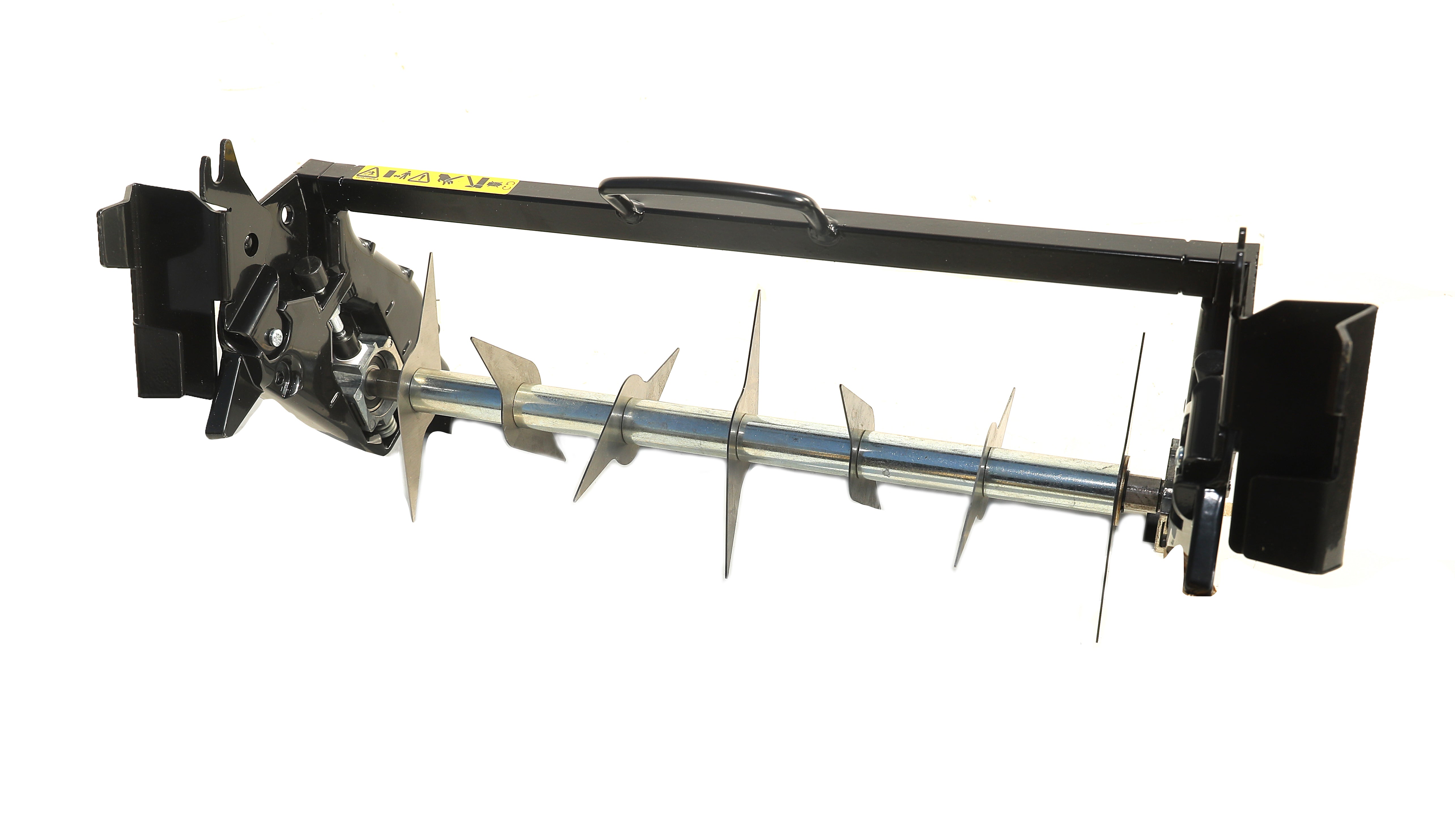
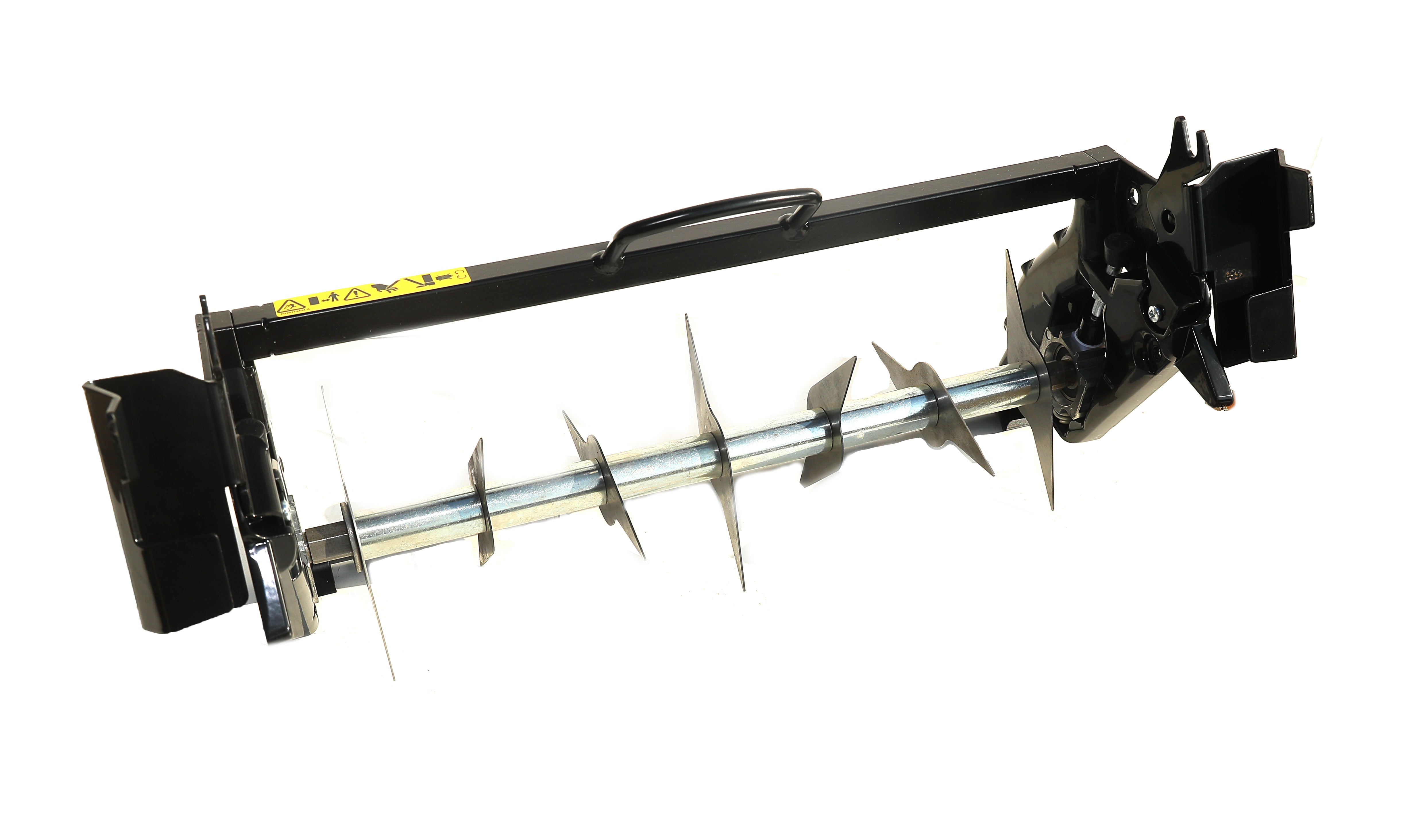
Allett Quick Change Aerator Cartridge
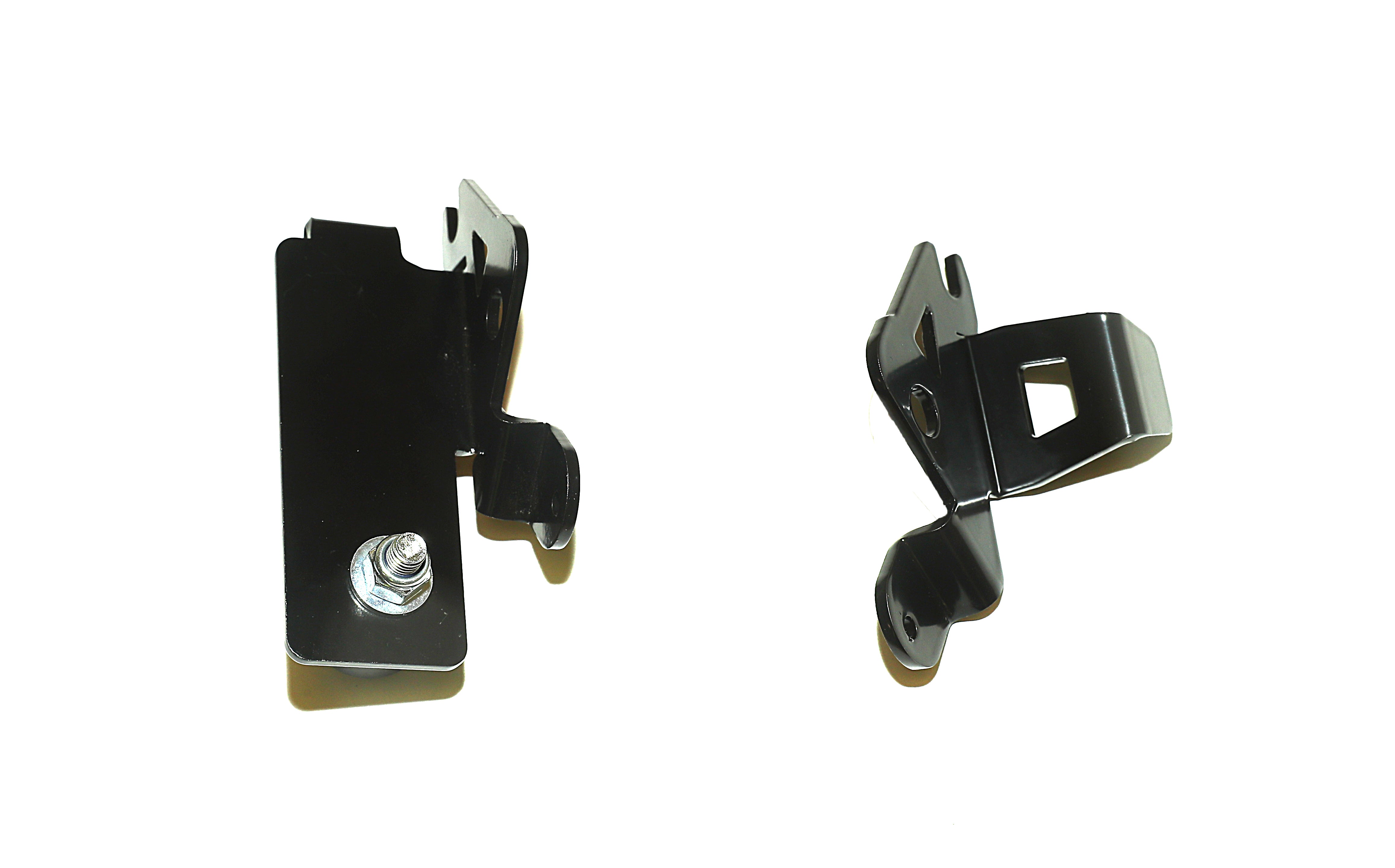
The QC cartridges have been replaced by RC versions. They are identical in size and function, with the only difference being added side brackets to support grassbag frames on newer models. These brackets can be removed with one screw each and replaced with rubber bungs to convert them back to QC.
Compatible with the following Mowers:
Classic
Liberty
Kensington
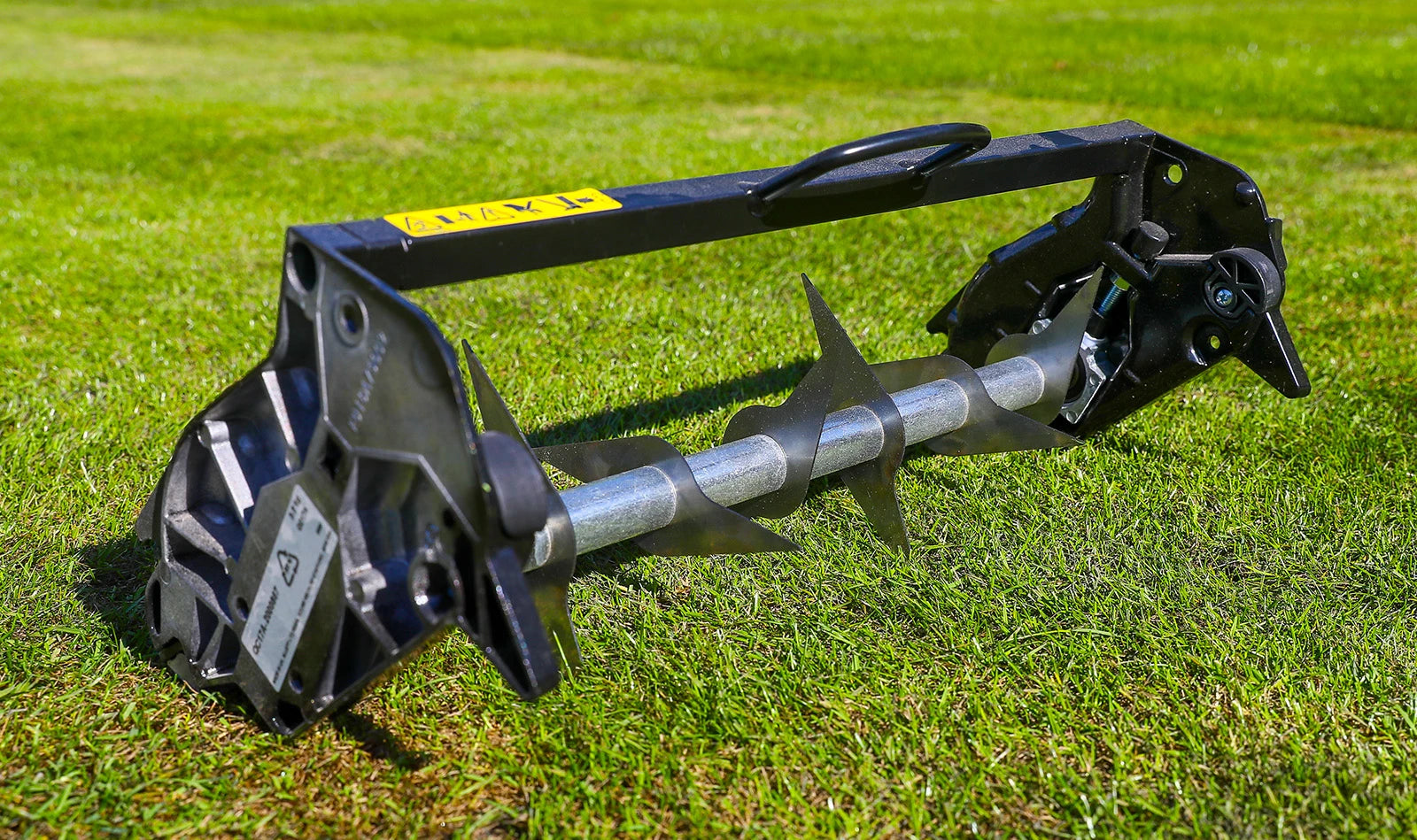
The ‘non-driven’ Aerator cartridge permeates the soil with small holes which allows air, water and nutrients to pass through more easily to the grassroots. This is beneficial as this helps the roots grow more deeply, meaning a healthier, thicker and more luscious lawn.
The Aerator also removes soil compaction and helps water move into the soil profile. Soil that is compacted has too many solid particles, which can prevent the soil from absorbing what it needs to flourish. Aerating your lawn stops the roots from being starved as there is nothing blocking that process.
Aerating your lawn involves making small holes in the soil to allow water, air, and nutrients to reach the grass roots. This can be beneficial for several reasons:
Benefits of Aerating
Improved Soil Health
Aeration helps to break up compacted soil, which can improve drainage and allow air and water to reach the roots more easily. This can help to encourage healthy grass growth. Compacted soil can cause flooding as the water cannot pass through.
Reduced Thatch Build Up
Thatch is a layer of dead grass and other organic material that can build up on the surface of the soil. Over time, this can prevent water and nutrients from reaching the roots, leading to unhealthy grass. Aeration can help to reduce thatch build-up by breaking it up and allowing it to decompose.
Enhanced Nutrient Absorption
Aeration can help to improve the absorption of nutrients, such as fertilisers, by allowing them to reach the roots more easily.
Improved Stress Tolerance
Aeration can help to improve the stress tolerance of grass, making it more resilient to drought, foot traffic, and other stressors.
| Feature | Aerator | Scarifier | Dethatcher | Verticutter |
|---|---|---|---|---|
| Primary purpose | Relieve soil compaction | Light thatch and debris removal | Heavy thatch removal | Upright grass and remove lateral growth |
| How it works | Spikes or hollow tines penetrate the soil | Fine blades or spring tines lift surface material | More aggressive blades dig deeper and rip out build-up | Fine vertical blades slice into the turf canopy |
| Depth of action | Into the soil root zone | Surface level | Below surface | Very shallow, just into the turf canopy |
| Aggressiveness | Medium | Low | High | Low to medium |
| Best for | Compacted or poorly draining soil | Regular lawn maintenance | Neglected or thatch heavy lawns | Fine turf, stripes, and presentation lawns |
| Frequency | Usually 1 to 2 times per year | Often during the growing season | Occasionally as needed | Frequent use on high end lawns |
| Impact on lawn | Minimal visible damage | Minimal stress when used regularly | Can leave the lawn looking rough short term | Very minimal, mostly cosmetic improvement |
| Main benefit | Improves airflow, drainage, and root growth | Keeps the surface clean and healthy | Resets lawns with thick built up thatch | Improves stripe quality and cut consistency |
| Typical result | Stronger roots and better water penetration | Cleaner surface and better airflow | Reduced heavy thatch and a cleaner base layer | More upright grass, cleaner cut, and sharper stripes |
| Use case | Seasonal soil improvement tool | Routine maintenance tool | Corrective tool for excessive thatch | Presentation and fine turf improvement tool |

Cartridge Comparisons
We compare the Allett QC Cartridge System options in real working conditions, including the Allett 10 Blade Cartridge for ultra-fine mowing, the Allett Scarifier Cartridge for regular thatch control, and the Allett Verticut Cartridge for upright growth and improved presentation.
You’ll also see the more intensive renovation tools in action, such as the Allett Dethatcher Cartridge, designed to remove deeper layers of thatch and moss, alongside the Allett Aerator Cartridge, which opens up the soil to improve airflow, drainage, and root development.